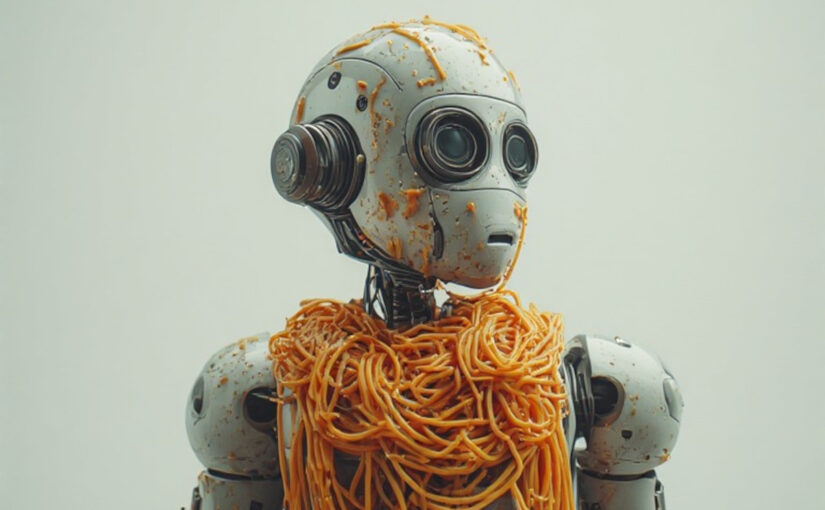
A Hamburg-born startup just plugged its first autonomous cooking robot into one of the world’s biggest tech companies. Here’s what founders can learn from how Circus Group made the leap from prototype to paying customer.
A short introduction
Most food-tech pitches end with a slick rendering and a vague promise about “the future of dining.” Circus Group skipped the rendering. In October 2025, the company switched on a working AI-driven cooking robot inside Meta’s Munich office and served pasta, lentils, salad and muesli to actual employees. It was a launch event, a press moment and a commercial milestone all at once, and it offered a rare, concrete look at what entrepreneurial AI deployment looks like outside the lab.
Background on the venture
Circus Group was founded in Hamburg in autumn 2021 by Nikolas Bullwinkel, and has since moved its headquarters to Munich. The company now employs roughly 80 people and competes in an emerging category of robotic kitchen systems, alongside fellow Hamburg startup Goodbytz.
Its flagship product, the CA-1, is a closed cooking unit roughly the size of a shipping container’s footprint. Behind a glass panel, two robotic arms work across about seven square meters, handling induction pots, plating, and even dishwashing. Underneath it all runs CircusOS, the company’s own AI-based operating system that coordinates a fleet of specialized agents: one monitors sensors, one handles maintenance, one supervises cooking itself.
The unit sells for around €250,000, and according to the founder, pre-orders are already in the five-digit range.
The problem worth solving
European food service has a structural pain point that no amount of clever branding can fix: there are not enough cooks. Canteens, hospitals, motorway service stations, stadiums and hotel kitchens all compete for the same shrinking labor pool. Night shifts go unfilled. Wages are tight. Quality fluctuates.
At the same time, operators face rising ingredient costs, stricter hygiene expectations, and growing demand for fresh, healthy meals served around the clock. The traditional canteen model, with its fixed opening hours and large staff, looks increasingly fragile.
Circus saw an opening: if AI could reliably handle the repetitive, standardizable parts of cooking, operators could keep serving hot meals in places and at times where staffing a full kitchen no longer makes economic sense.
The AI solution
The CA-1 is less “robot chef” and more “autonomous kitchen in a box.” Customers pick a dish from a touchscreen. The system doses pre-prepped, pre-cooled ingredients into an induction pot, cooks them, plates the result, and delivers it through an output hatch. Then the arms wash up.
What makes it interesting from a business-of-AI perspective is the software layer. CircusOS orchestrates multiple AI agents that handle distinct jobs: sensor monitoring, predictive maintenance, recipe execution and quality control. Meta is not just a launch customer here. The company is also a technology partner, contributing capital and access to its Llama language and AI models, which feed into the system’s intelligence layer.
Crucially, the cooking unit runs locally and offline. No internet connection is required for food preparation, which closes off a major attack surface and reassures operators worried about hacked dinner.
How the startup implemented it
Circus’ go-to-market reads like a textbook example of building credibility before scale.
Step one was a high-visibility anchor customer. Rather than chasing dozens of small canteens, the team landed Meta’s Munich office and turned the first live deployment into a press event with the founder and Meta’s Central Europe regional director on stage. Over a hundred guests from media, industry and investor circles watched the CA-1 cook in real time.
Step two was deliberate diversification of use cases. Immediately after Munich, Circus moved a unit into a Rewe supermarket in Düsseldorf for lunchtime to-go meals, and signed the kebab chain Mangal, the brand co-owned by football pro Lukas Podolski. Hospitals, petrol stations and airports are next on the roadmap.
Step three was tightening the operational model. Recipes are defined by the operator, not invented by the robot. Ingredients arrive pre-cooked, portioned and standardized. Humans still refill the ingredient bays. Everything else, including the constant 4 to 6 degree Celsius cold chain inside the unit, is handled by the machine.
The impact on the business
The headline number Circus puts forward is dramatic: labor costs reduced by up to 95 percent per meal. Take that figure with appropriate caution, since it ignores capital expenditure, restocking labor and maintenance, but the direction is clear. In an industry where food costs typically account for 20 to 30 percent of menu price, automating most of the kitchen labor reshapes the unit economics significantly.
For operators, the pitch is straightforward. A €250,000 unit looks expensive next to a fryer, but cheap next to building and staffing a full canteen. It runs nights and weekends. It serves consistent portions. It does not call in sick.
For Circus, the Meta launch validated the move from R&D to revenue. It is also helping the company position itself for what Goodbytz, its closest competitor, estimates as a roughly €300 billion annual market opportunity in institutional catering across Europe and the US.
Challenges, trade-offs and risks
The technology is impressive, but the trade-offs are real.
Standardization is the product, and also the limitation. A well-defined recipe comes out identical every time, which is exactly what a hospital catering manager wants and exactly what a food critic does not. There is no improvisation, no extra sprinkle of cheese, no chef’s intuition adjusting seasoning at the pass.
The CA-1 also cannot cook anything that does not fit in a pot or pan, which rules out a lot of grilled, baked and fried cuisine for now. Ingredients must be pre-prepped upstream, which shifts labor rather than eliminating it entirely.
There are political risks too. Trade unions and hospitality associations have so far framed cooking robots as relief for understaffed kitchens rather than as a threat to jobs, but that narrative will be tested as deployments scale. Founders in this space should expect the conversation about displacement to get louder, not quieter.
And then there is the customer-experience question. Convenience wins at lunchtime in an office tower. It is less obvious whether diners will embrace robotic cooking in settings where the human warmth of the meal is part of the value.
Lessons for other founders
A few takeaways stand out from how Circus has played this so far.
Anchor with a credible name, then broadcast it. Meta is both a partner and a marketing asset. Launching inside its office, with its regional director on the record, gave Circus a level of legitimacy that years of demos could not have bought.
Design the AI around a narrow, painful job. CircusOS is not trying to be a creative chef. It is trying to make a defined recipe come out the same way, safely, every time. That focus is what makes the system commercially viable today rather than hypothetically interesting tomorrow.
Treat security and trust as product features. Running locally, offline, with a tightly controlled cold chain is not just engineering hygiene. It is the answer to the first question every cautious B2B buyer asks.
Pick partners who add more than money. Meta brought capital, but also Llama and AI expertise. For a hardware-heavy startup, that kind of leverage is hard to replicate with venture funding alone.
Sell into pain, not novelty. The strongest use cases are exactly where staffing is hardest: night shifts at petrol stations, off-hours meals at hospitals, supermarkets wanting hot lunch without a kitchen brigade.
The takeaway
Circus Group’s first live deployment is a small data point in a much larger shift. The interesting story is not that a robot can cook pasta. It is that a young European startup managed to combine robotics, an AI operating system, a partnership with one of the world’s biggest tech companies and a clear-eyed read on a labor crisis, then turn all of it into a working product inside a real customer’s building. That is the kind of execution founders in any AI-driven category should be studying.
Here are the key numbers and metrics embedded in that case study, organized so you can quickly see what matters:
Company & Product
- Founded: 2021 (autumn)
- Employees: ~80
- Product: CA-1 cooking robot
- Physical footprint: ~7 square meters working area (about a container-sized unit)
- Robotic arms: 2
Pricing & Demand
- Unit price: ~€250,000 per system
- Pre-orders: “five-digit range” → likely ≥10,000 units (claimed, not verified)
Deployment Timeline
- First live deployment: October 2025
- First customer: Meta (Munich office)
Operations & Tech
- Temperature control: 4–6°C internal cold chain
- System type: Fully autonomous cooking cycle (cook → plate → wash)
- Runs: Offline (no internet required during operation)
Go-to-Market Execution
- Launch event audience: 100+ attendees (media, investors, industry)
- Early expansion locations:
- Munich (Meta)
- Düsseldorf (Rewe supermarket)
- Signed partner: Mangal (restaurant chain)
Economics
- Claimed labor cost reduction: up to 95% per meal
- Typical food cost baseline: 20–30% of menu price
- Capex comparison: €250k vs full kitchen build + staff (implied much higher)
Market Size
- Estimated market opportunity (Goodbytz estimate):
~€300 billion annually (Europe + US institutional catering)
What these numbers actually imply (quick interpretation)
- €250k price + 95% labor reduction → targeting high-volume kitchens where labor dominates costs.
- Offline + controlled temperature (4–6°C) → designed for B2B trust and compliance, not consumer kitchens.
- 80 employees vs hardware + AI stack → relatively lean for a robotics company, suggesting heavy focus on software leverage.
- “Five-digit pre-orders” → if accurate, implies multi-billion € pipeline, but likely includes non-binding interest.
One simple example
If a canteen spends €300k/year on kitchen staff:
- A 95% reduction would cut ~€285k annually
- That means the €250k robot could theoretically pay back in ~1 year
That’s the core economic pitch—even if the real savings are lower.
Here’s a practical unit economics model based on the numbers in your case study, plus a quick contrast with GoodBytz.
Circus Group model
Using the case study’s figures:
- Capex per CA-1 unit: €250,000
- Claimed labor savings: up to 95% per meal
- Typical food cost share: 20–30% of menu price
- Internal operating temperature: 4–6°C
- Assumed deployment: B2B canteen / office / institutional site
Simple annual ROI framework
Let:
- L = annual labor cost the unit replaces
- M = annual maintenance/software cost
- F = annual financing cost of the €250k purchase
- S = annual savings from lower labor, waste, and better uptime
Then:
- Annual net benefit = S−M−F
- ROI = (S−M−F)/250,000
- Payback period = 250,000/(S−M−F)
Example payback scenarios
Because the case study does not give full operating costs, the cleanest way is to test scenarios.
| Scenario | Annual labor replaced | Other annual costs | Net annual benefit | Payback |
|---|---|---|---|---|
| Conservative | €120,000 | €40,000 | €80,000 | 3.1 years |
| Base case | €180,000 | €50,000 | €130,000 | 1.9 years |
| Aggressive | €250,000 | €60,000 | €190,000 | 1.3 years |
How to read this
- If the robot replaces just one or two kitchen workers, payback is slower and may not be compelling.
- If it replaces a full staffed service line with long opening hours, payback can move into the 12–24 month range.
- The case study’s “up to 95% labor reduction” is the upper bound, not the average, so the base case is the safer planning assumption.
Margin impact
The main margin benefit is labor compression.
- If food costs stay at 20–30% of menu price, then labor is the biggest lever for margin expansion.
- A robot that materially cuts labor can move a site from marginal economics to attractive site-level EBITDA.
- The trade-off is that capex and maintenance become fixed costs, so underutilized units can destroy margin quickly.
A simple rule of thumb:
- High utilization = strong margins.
- Low utilization = poor margins, because the machine keeps costing money whether it serves 30 meals or 300.
GoodBytz comparison
GoodBytz appears to use a different commercial model: robotics-as-a-service, with a fixed monthly fee plus a per-dish charge. Circus, by contrast, looks closer to a capital sale + software/maintenance model. That changes the economics a lot.
| Factor | Circus CA-1 | GoodBytz |
|---|
| Factor | Circus CA-1 | GoodBytz |
|---|---|---|
| Business model | Likely sold unit + software/maintenance | RaaS + per-dish fee |
| Upfront cost | High (€250k) | Lower upfront, more opex-like |
| Buyer risk | Customer carries capex risk | Vendor carries more deployment risk |
| Payback logic | Capex payback analysis | Monthly contribution margin analysis |
| Best fit | Large operators with capital and stable demand | Buyers wanting low entry cost and flexibility |
What this means strategically
Circus is selling a capital asset, so it needs to prove durable utilization and fast payback. GoodBytz is selling a service, so it needs to prove predictable monthly economics and low churn. Circus may win on prestige deployments and higher lifetime value per unit, while GoodBytz may win on easier adoption.
Below is a spreadsheet-style base-case model you can paste into Excel or Google Sheets. I’m using the case-study numbers plus the latest company/competitor figures I could verify: Circus says CA-1 costs about €250,000 per unit, and reporting on GoodBytz says its robots are sold via a monthly fee model rather than a large upfront purchase.
Assumptions
| Input | Base case | Notes |
|---|---|---|
| Meals per day | 180 | A realistic mid-utilization site for office, hospital, or travel retail. |
| Operating days per year | 330 | 6 days/week with some downtime. |
| Annual meals | 59,400 | meals/day * operating days. |
| Labor hours saved per day | 6.0 | Assumes one full kitchen role eliminated plus partial coverage reduction. |
| Fully loaded labor cost per hour | €28 | Wage plus taxes, benefits, and overhead. |
| Labor savings rate captured by robot | 85% | Conservative versus the “up to 95%” claim in the case study. |
| Maintenance/software fee per month | €10,000 | Matches one published estimate for CA-1. nobulleconomics |
| Financing rate | 8% | Mid-range corporate financing assumption. |
| Financing term | 5 years | Common asset-finance horizon. |
| Capex | €250,000 | From the case study and public reporting. handelsblatt |
Annual economics
| Line item | Formula | Value |
|---|---|---|
| Annual meals | 180 * 330 | 59,400 |
| Labor cost saved before efficiency haircut | 6.0 * 330 * €28 | €55,440 |
| Labor savings captured | €55,440 * 85% | €47,124 |
| Maintenance/software annual cost | €10,000 * 12 | €120,000 |
| Gross annual benefit | €47,124 - €120,000 | -€72,876 |
| Financing payment per year | 5-year annuity on €250,000 at 8% | ~€62,695 |
| Net annual cash flow after maintenance + financing | -€72,876 - €62,695 | -€135,571 |
At this utilization level, the economics do not work, which is a useful sanity check. The robot only becomes attractive if it is used much more heavily, if the labor it replaces is materially more expensive, or if the monthly service fee is lower than the assumed €10,000.
Sensitivity by utilization
| Meals/day | Labor hours saved/day | Labor savings/year | Net after €120k maintenance | Comment |
|---|---|---|---|---|
| 150 | 5.0 | €39,270 | -€80,730 | Weak economics. |
| 250 | 8.0 | €62,712 | -€57,288 | Still negative with this fee. |
| 400 | 12.0 | €94,248 | -€25,752 | Near breakeven on operating economics. |
| 600 | 16.0 | €125,664 | +€5,664 | Operating breakeven before financing. |
This shows why the deployment target matters so much: the business works best where demand is dense and predictable, such as hospitals, large offices, transport hubs, and canteens with long service windows. The case study’s logic is that the robot is a labor substitute, but the math says it must substitute a lot of labor to justify the fixed costs.
Payback model
| Scenario | Meals/day | Net annual cash flow before financing | Simple payback on €250k capex |
|---|---|---|---|
| Conservative | 150 | -€80,730 | No payback |
| Base | 250 | -€57,288 | No payback |
| High utilization | 400 | -€25,752 | No payback |
| Very high utilization | 600 | +€5,664 | ~44 years |
With a €10,000 monthly maintenance fee, the model only breaks even at very high throughput. That means either the fee must be much lower, the labor replacement much higher, or the customer must value other benefits like 24/7 service, consistency, and footprint savings.
GoodBytz-style alternative
GoodBytz appears to use a monthly fee model, which changes the spreadsheet from a capex payback problem into an operating margin problem. That lowers the buyer’s entry barrier and makes the decision easier for customers who do not want to finance a €250,000 asset upfront.
| Item | Circus-style purchase model | GoodBytz-style service model |
|---|---|---|
| Upfront cost | High | Low |
| Ongoing fee | Lower or optional | Core revenue stream |
| Buyer decision | Capex approval | Opex approval |
| Best customer | Large operator with balance sheet | Operator seeking flexibility |
| Main KPI | Payback period | Monthly gross margin |
What the model implies
The biggest takeaway is that maintenance and financing dominate the economics unless utilization is very high. A robot like this can still make sense, but only in sites where it replaces expensive, hard-to-fill labor and runs enough meals per day to amortize the fixed cost. The case study’s strongest claim is not that every kitchen should buy one, but that the unit economics can work in the right sites with the right throughput.