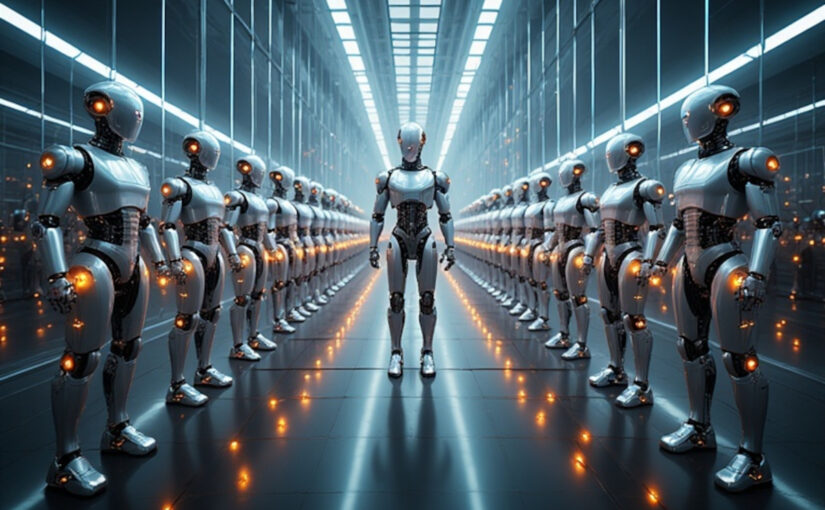
Humanoid robots are no longer a sci-fi dream. They are here, they are advancing fast, and they are coming for your company’s labor budget.
Tesla’s Optimus, Figure AI, and Agility Robotics are leading a new generation of machines built to walk, lift, sort, and assist in environments designed for humans. Warehouses, hospitals, retail floors, construction sites. These robots are being engineered for all of it. The question businesses need to start asking right now is simple but critical: how much will it actually cost to run one of these machines, hour by hour?
The answer is more encouraging than most people expect.
Breaking Down the Numbers
Calculating an hourly robot cost works like any standard business depreciation model. You take the total lifecycle expenses, spread them across operational hours, and arrive at a usable figure.
Analysts from RethinkX, Goldman Sachs, and IDTechEx have been doing exactly that. Their findings point to a steep and accelerating cost decline over the next decade.
Conservative estimates for 2025 place the hourly operating cost of a humanoid robot somewhere between $2 and $14, depending on the vendor, the deployment model, and how many units a company is running. That range reflects the current reality of early-stage production, where per-unit manufacturing costs are still high and software ecosystems are maturing.
By 2030, broader adoption and scaled production are projected to compress that figure to $1 to $5 per hour. Push further to 2035, and aggressive forecasts suggest costs could fall below $1 per hour for high-volume operations that benefit from design simplifications and next-generation components.
| Year | Estimated Hourly Cost | Context |
|---|---|---|
| 2025 | $2 to $14 | Early units, variable by vendor and scale |
| 2030 | $1 to $5 | Projected with scaling production |
| 2035 | Under $1 | High-volume deployments and optimizations |
These projections assume a robot lifecycle of roughly 20,000 operating hours, or about 7,000 hours annually across three years of intensive use. Within that window, costs include unit depreciation, maintenance averaging 10 to 20 percent of unit cost annually, energy consumption running just cents per hour on modern battery systems, and AI or software licensing fees comparable to enterprise subscriptions.
The Robot as a Service model, known as RaaS, is emerging as a compelling option for businesses that want to sidestep large upfront investments. Providers bundle all costs into a predictable monthly or hourly fee, much like leasing industrial equipment. For smaller companies, that model could be the difference between accessing this technology or being priced out entirely.
How Do Robots Stack Up Against Human Workers?
This is where the numbers get genuinely disruptive.
In developed economies, the fully loaded cost of a human worker, factoring in salary, taxes, healthcare, benefits, training, and turnover, routinely exceeds $40 per hour. Break it down by sector and you see figures like $25 to $50 per hour in manufacturing, $30 to $45 in logistics, $35 to $60 for healthcare aides, and $20 to $40 for service roles like retail stocking.
At $2 to $14 per hour, early humanoid robots are already operating at roughly 25 to 30 percent of equivalent human labor costs. That gap only widens when you factor in productivity. A robot that operates twice as fast as a human on a repetitive task effectively halves its cost per unit of output, dropping the real comparison to around 13 to 16 percent of human wages.
For industries like logistics, the math is already compelling. Agility Robotics’ Digit platform is being tested in package sorting environments where the labor savings from a single robot could fund multiple human shifts. For sectors like elder care or patient-facing healthcare, where emotional intelligence and human connection matter enormously, robots are more likely to serve as force multipliers for human workers rather than replacements, at least in the near term.
What Is Pushing Costs Down So Quickly?
Several forces are converging to accelerate the decline, and they reinforce each other.
Mass production is the biggest lever. Tesla has publicly targeted a sub-$20,000 per-unit price for Optimus through scaled assembly line production, drawing direct comparisons to how smartphone manufacturing collapsed hardware costs over two decades. The same logic applies here. More units mean cheaper components, tighter supply chains, and refined manufacturing processes.
Battery technology is advancing in parallel. Solid-state battery innovations are projected to cut energy consumption by 50 percent or more compared to current lithium-ion systems, trimming operational costs to near-negligible levels per hour.
Software is getting cheaper too. Open-source AI integrations are reducing the cost of updates and training models, shifting what was once an expensive proprietary licensing landscape toward a more accessible ecosystem. RethinkX has forecasted a tenfold reduction in robot operating costs every eight years, which would turn a $10 per hour robot today into a $1 per hour robot by the early 2030s.
Maintenance is evolving alongside the hardware. Predictive maintenance algorithms are already being embedded into robot operating systems, allowing machines to flag component wear before failures occur. That extends operational lifespans well beyond the 20,000-hour baseline and reduces costly downtime. Over time, robots maintained this way could remain productive for significantly longer, further improving the cost-per-hour equation.
Supply chain risks remain a genuine concern. Rare earth metals used in motors and batteries are subject to geopolitical pressures and sourcing constraints. Regulatory frameworks for autonomous machines are still being written in most jurisdictions. These factors could slow the decline. But most analysts consider them speed bumps rather than roadblocks, given the scale of capital and talent now pouring into this sector.
The Factors That Go Beyond the Price Tag
Hourly cost is the headline number, but it is not the whole story.
Reliability matters. Humanoid robots can operate 24 hours a day without fatigue, breaks, or sick days. That alone is a structural advantage in any continuous production environment. Early models have struggled with failure rates around 5 percent, but as AI systems mature and hardware becomes more robust, that figure is projected to fall below 1 percent. For businesses considering deployment, that trajectory is worth tracking closely.
Safety standards are keeping pace. Collaborative robot guidelines, including ISO frameworks for shared human-robot workspaces, are being applied to humanoid platforms as they move into factories and care environments. These standards are not optional extras. They are prerequisites for deployment in any regulated industry, and compliance adds cost but also reduces liability exposure.
The ethical dimension is harder to price. Widespread deployment of sub-$5 per hour robot labor will displace workers in repetitive manual roles. That is not speculation. It is the economic logic of automation. The optimistic view, backed by historical precedent from previous automation waves, is that displaced workers migrate toward roles requiring judgment, creativity, and interpersonal skills. The pessimistic view is that reskilling programs fail to keep pace and economic disruption falls hardest on the most vulnerable workers.
Both possibilities deserve serious attention from policymakers, employers, and labor advocates right now, before the transition accelerates.
Equity is a related concern. If RaaS pricing still favors large enterprises with purchasing leverage, smaller businesses could find themselves unable to compete on cost with larger rivals who have automated heavily. That dynamic could concentrate market advantages in ways that widen existing gaps between large and small operators.
The Bigger Picture
Goldman Sachs projects the humanoid robot market will reach $38 billion by 2035. That number reflects a technology moving from pilot projects into genuine commercial infrastructure.
The path runs roughly in this order: controlled warehouse environments first, then manufacturing and logistics, then retail and construction, then healthcare and service industries. Each stage brings broader deployment, more data, better software, and lower costs. Companies like Figure AI, already running factory trials with BMW, are demonstrating that the commercial phase has already begun.
For businesses thinking strategically, the advice from most analysts is consistent. Start piloting RaaS models now. Build internal familiarity with integration requirements. Develop a workforce transition plan before it becomes urgent.
The cost curve for humanoid robot labor is heading in one direction. When it breaks below $1 per hour at scale, it will not just reduce operating expenses. It will fundamentally reset assumptions about what is economically possible in labor-intensive industries.
The mechanical workforce is no longer a future consideration. It is a present-tense business planning challenge. How companies respond in the next few years will shape their competitive position for a long time after.